
I will Arise and Go to My Father.
Text within this block will maintain its original spacing when publishedThis Sunday we turn a corner toward the Passover of the Lord.
The fourth Sunday in Lent
marks the week when those who were
asked to leave the church over issues of sin
were allowed back into the fellowship.
And the name of this Sunday,
Laetare
means rejoicing.
There is rejoicing
in heaven
whenever one sinner returns to the Lord.
This Sunday is about repentance.
As it says in Hosea:
Come,
let us return to the Lord
who has stricken us,
and he will heal us,
and on the third day
he will raise us up.
We are back to this word we never leave:
Shuv.
The act of returning to God
in Hebrew is Teshuva,
and the root of this is Shuv,
return.
Return to me.
A few years ago
I recorded a video
where I explained that many people
want the fruit of revival
and not the God of revival
and so no revival happens.
You cannot understand Shuv,
unless you understand that all Hebrew verbs
are directional and relational.
So you turn toward Someone,
not away from Sin
but toward God.
The object of the verb matters.
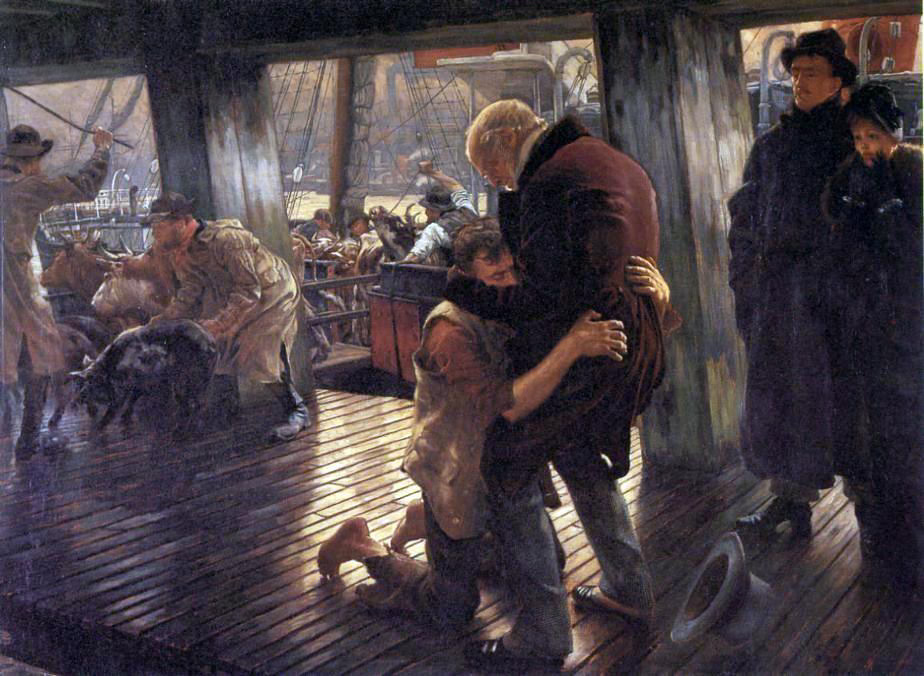
The story of the Prodigal Son in Luke 15
is probably the most well known of all
the stories Jesus told.
And this is dangerous
because we think we know what we are talking about.
We think we know what's there,
and we think we know what the story is about.
This story is about a selfish son,
who demands
his inheritance,
and he goes
and runs off
and gets into sex, drugs, and rock and roll
and he blows the money.
And then the father
receives him back
and kills the fatted calf.
And we are all that son,
and we are all in need of returning to the Father.
But that is only one part of the story.
This is not the story of a prodigal son.
This is about the Kingdom,
not the experience of getting saved.
And the second part of repentance
after turning to God
is Metanoia,
Having your thinking changed.
A lot of us change our behavior,
but we do not change our thinking.
And because of this,
we never experience the fullness of what God has for us.
In order to understand this story,
we need to begin a page earlier
at the end of Luke, Chapter 13.
Jesus has announced that he is now on his way
to Jerusalem
and that he must die there
like all the prophets.
On the Shabbat,
he goes to dine at the house of a ruler
who belonged to the Pharisees.
And he taught them
and healed,
and talked about the Kingdom.
And honestly,
he challenged them about
how they said some people were more valuable than others
because of rank or class.
He challenged their belief that they have to do things to make God happy.
He challenged them about their obsession with money.
Then Jesus left,
and great multitudes followed him.
And it is clear,
he went from the fancy dinner with the
Pharisees and scribes,
and then began to eat with the sinners
and the tax collectors.
And the Pharisees and scribes
began to gossip and talk behind his back,
"This man receives sinners
and eats with them."
In response, Luke 15,
Jesus teaches three of his
most well known
parables.
The parable of the lost sheep,
the parable of the lost coin,
and the story of the prodigal son.
But this story is not about the son.
And Jesus tells us it is not about the son,
because the story begins
"A man
had two sons."
A man.
This is the story of a father.
And the younger son,
who we think is the bad boy,
goes to his father,
and asks for his inheritance.
We forget
that the young man
is saying,
"Dad, I wish you were dead
so I could have all my inheritance."
And the Father is
a sensitive and tender soul
who does not want to lose his son.
He grants the wish.
The Father
divides his property
between the two sons, equally.
And the turn of this story
is how the two sons
respond to receive their full inheritance.
This is a very important detail.
Both sons get their inheritance.
Let me say that again,
because I don't think I have ever heard it mentioned.
Both sons get their inheritance.
And the Father,
with no property,
and no work,
goes and waits
for the one son
to return.
The Father
is broken hearted.
As we know,
the younger son eventually comes to his senses.
And desides to Shuv:
To return to the Father.
He has a change of thinking,
and his suffering cures his narcissism,
and he becomes willing to be a slave in his father's house.
And the Father,
who is sitting on his roof looking toward the road
where his son left,
sees his son in the distance.
It is not about property,
it is not about disobedience.
It is about having a relationship.
The Father wants to have a relationship with his son.
And so the Father runs
and goes and meets him.
And he takes this son
who by the world's standards
is a scoundrel
and a failure,
and he makes him a conquering hero.
There is something heroic in
embracing an honest revelation of our lies.
There is something heroic
in receiving the gift of repentance.
And we have the feast,
with a fatted calf.
Now remember,
the Father has two sons.
And he has no property.
That calf belonged to the older son.
And the older son,
well he received his inheritance at the beginning of the story.
And yet, he didn't celebrate.
He worked harder.
And it is clear,
he was angry and resentful toward his brother
who left,
not just with half the property,
but left him with all the work.
And he is pretty resentful toward his dad as well.
Notice
that the father is all alone.
And the older son refuses
to come to the celebration.
He's mad at everybody.
And the son says to his father.
I have kept all the rules, perfectly.
I have done all the work.
And you have never even given me
just a little to have a party with my friends.
(Now remember,
he has received all his inheritance.)
And now you are throwing a party
for my rotten brother.
And the Father says,
You are always with me.
Everything I have is yours.
You are always with me.
Everything I have is yours.
You are always with me.
Everything I have is yours.
The older son,
even though he got the better inheritance
was an orphan.
And because he was an orphan,
he could not rejoice over the return of his brother.
He could not embrace the lavishness of the father.
The orphan says,
it all depends on me,
and if there was all the money in the world
there would still not be enough.
This is all about the Kingdom.
Jesus has laid bare
the reality
that the scribes and Pharisees
are doing everything they can
to bring the Kingdom of God
and now that it is here
they are not interested.
I remember when I first went to Boston,
and I was at a prayer meeting
and people were crying out
for God to send leaders to Boston to lead.
And I went up to the person leading afterward
and said,
God just moved me here
and I think I might be the answer to your prayer.
She looked me up and down and said,
"No thanks."
Jesus had just come from dinner
with the leaders.
They had received the full inheritance.
They had the first opportunity to be with Jesus,
and instead of celebrating,
they argued and challenged him.
We want a Messiah,
but not this one.
And so Jesus left,
and he ate with the multitudes.
How much do you want to bet,
that dinner with the tax collectors and sinners
was not kosher?
Billy Joel once sang that he would rather
live with the sinners than die with the saints,
the sinners are much more fun.
And those sinners
wanted to be with Jesus
and they wanted to come back to the Father.
And Jesus said if you want to come with me
you have to die.
And so they came
and he ate with them.
If you have seen Jesus you have seen the Father.
This is the gospel.
This isn't a message for the unsaved today.
This is a message for the believer.
It might shock you,
but you are probably not right.
Most of the people who come to me
and challenge me
begin by assuming that they are right
and I need to be corrected.
That's fine,
but there is great danger
in judging other people by your starting place.
The measure you use for others
God promises he will use for you.
And Jesus is saying,
yes, you wicked sinners need to stop living like pigs,
and come home,
where being a slave is better than where you are.
And if you do this,
the Father is going to run
and he is going to dress you
and he is going to throw a feast for you.
But more importantly,
Jesus is saying
some of you have had all the benefits of a Christian culture,
and a Christian family,
and have been blessed in a multitude of ways.
Part of your repentance
is to come into the feast,
welcome the latecomers without all the benefits,
and celebrate with them.
Some of you need to give up all your right ideas about God
and theology
and stop correcting other people's fine points of doctrine,
and you need to meet the Most Relational Being in the Universe,
who is sitting in the back of your church.
Being right about a God according to a system
is not a replacement
for a relationship with God.
Some of you need to come back to the God of Revival.
Your prayer meetings,
and fixation on unity to make God do something,
and trying to repent for every sin ever committed
in the past
has kept you from knowing the Father.
And you may be doing it all perfectly,
but you have never walked into your inheritance.
The Father has given you his inheritance.
He has given you the Holy Spirit as a downpayment,
and he has given you the True Bread from Heaven, Jesus.
You have all you need,
and the Father says come.
Come unto me.
Come unto me.
Let me be your Father.
I want to know you.
Jesus was telling this story
to the Pharisees,
and he reinforced it
by telling them another story.
The next parable is
about the dishonest steward:
who did what the tax collectors were doing,
changing all the bills for their own benefit.
And Jesus praises them.
And Jesus ends this episode with a telling statement:
"You are those who justify yourselves
before men,
but God knows your hearts;
for what is exalted among men
is an abomination in the sight of God."
(Luke 16:14)
Context is everything.
We are given an opportunity today
to turn to the Lord before we celebrate the
saving acts of God.
God knows everything about you.
God sees everything.
We live in the illusion
that if people do not see things
God doesn't either.
God sees the heart.
And some of the greatest sin
is in the church.
I'm not talking about sex or porn.
I am talking about self-righteousness.
Are we judging others
and making our views and our lifestyle
the standard for others?
Are we looking at other Christians and
trying to point out their fine theological errors?
Are we trusting in our own activity?
Are we living in the past?
Are we hard toward God and other people?
Are we loving money?
Have we embraced a theology of the strong
that rewards gym memberships,
financial statements,
and self-achievement?
There is this trend in the United States
where people are digging around in the pasts of others
and bringing down leaders.
Somehow this is seen as some righteous act.
And in the United States,
Christian leaders are guilty and never proven innocent.
This isn't about secret sin,
this is a self-righteous witchhunt.
No one can survive this level of scrutiny.
Are you spreading stories of leaders
thinking you are helping?
Gossip is a form of witchcraft,
a form of demonic prophecy.
It kills everything God is doing.
Are you spreading stories?
God does not rejoice in the death of a sinner.
The Father
is here.
The full inheritance is yours.
The Kingdom is all about having a relationship
with the Father
and turning to the God of revival
in honesty,
humility,
and as a community
is the only path to real revival.
I will arise
and Go to my Father.
The Father will run to meet you.
This is the gospel.
Text within this block will maintain its original spacing when published
Subscribe to my newsletter to get the latest updates and news

Member discussion