
The Best Bibles for Artists
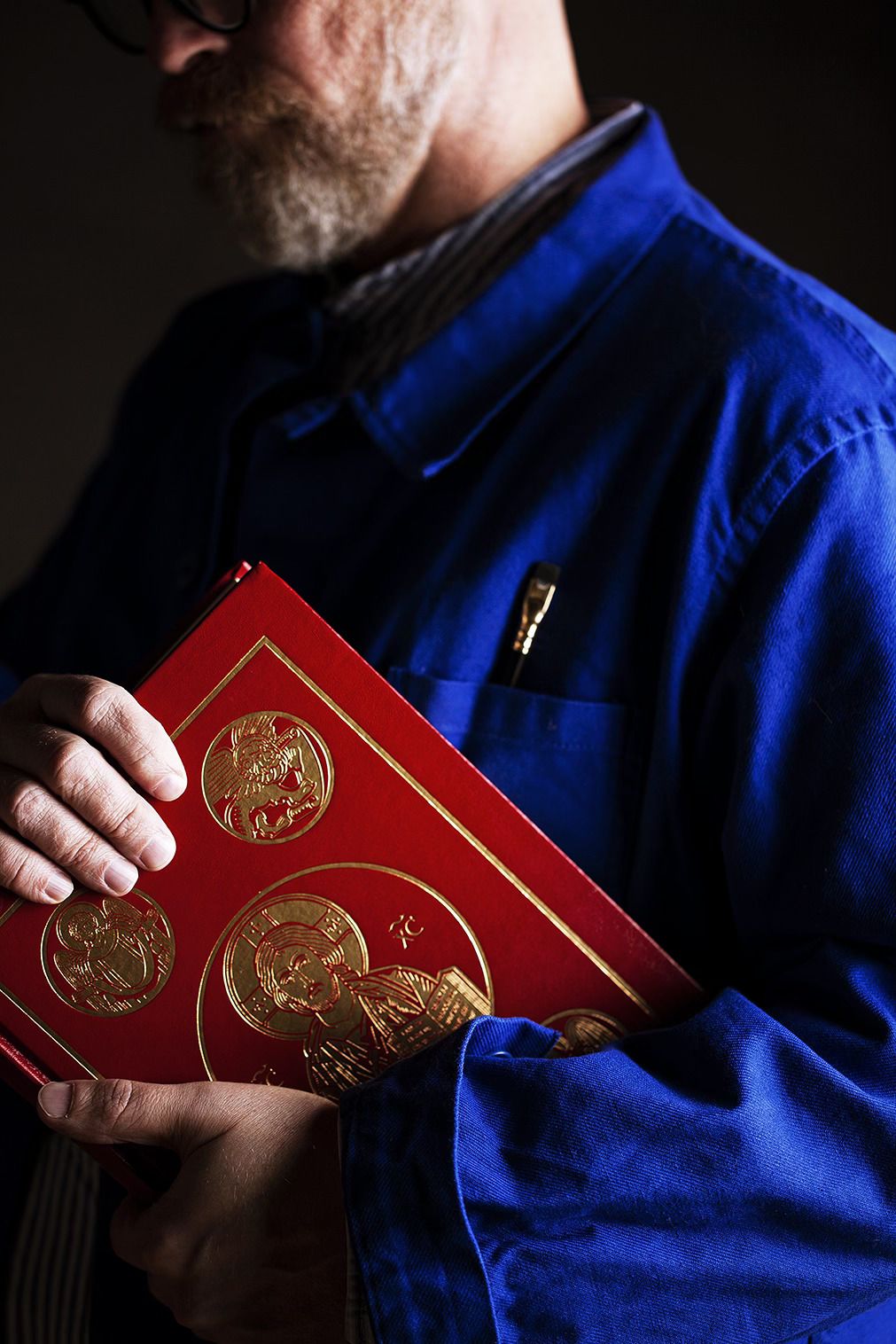
The greatest source material for the arts is the Bible.
I lead a Christian community of artists and creative people. Often I am asked what Bibles I recommend, and what Bible I use. Here are my current recommendations. There should be something here to offend everybody.
When I am looking for a Bible, I ask these questions:
1. Are words and ideas related to the arts and creativity mistranslated, or translated in a way that obscures the intent of the original? You may be surprised, but the words artisan, artist, creative, imagination, and icon, all appear in the original greek and Hebrew but are often intentionally mistranslated.
2. Does the translation use beautiful language in the English? Is the language clear? Does it represent the best in the English Bible tradition? If it is a contemporary language version, is the text easily readable?
3. Does the Bible include the Apocryphal/Deuterocanonical books? Our community is in the Anglican tradition, and we use the lectionary. The lectionary includes readings from the Apocrypha. I also consider several passages from Sirach and Wisdom to be foundational for a theology of the arts, so it is important that an artist can read them.
4. Does the Bible have a balanced theological perspective? Does the translation team come from a broad representation of the church, and is it recognized by various Christian denominations?
5. Is the Bible available in an edition that uses beautiful type, is well designed, and in an excellent binding? I am an artist, and if I am going to use a Bible, it needs to be lovely object to read, hold, and carry.
For full disclosure, I have two degrees in Bible and theology. My undergrad is in Bible and Christian Education, and my masters degree is a Master of Divinity from Asbury Theological Seminary. My personal perspective is Anglican/Wesleyan. I read Greek, and try to read the Bible in the original language as much as possible.
I group Bibles in categories: What I use, highly recommend, recommend with reservation, and do not recommend. And sadly, I list a few Bibles you should avoid.
Again, this is a list of Bibles for artists and creative people. It's not a list for engineers or reformed pastors. Please keep this in mind if you want to comment.
And it should be noted, the Word of God is living and powerful. Any legitimate translation of the Bible can change your life. At some point in my life I have used most of the Bibles on this list. My recommended Bibles are available at the Belonging House Media Bookshop. (https://bookshop.org/lists/bibles-for-artists)
What I use.
For my personal Bible study I use the New Cambridge Paragraph Bible. It is a scholarly edition of the King James Version. It was edited by David Norton, one of the foremost English literature scholars in the world. The original King James is actually very easy to read and is very close to the original languages. It is a gorgeous Bible with wide margins and elegant type, but it is a beast, at around seven pounds. I have schlepped this monster all over the world.
The Penguin version of the Bible uses the plates from this book if you want to try it out without the big price tag. Thats what I did. And you can draw pictures in a paperback.
For reading and teaching in public, I use the Revised Standard Version Catholic Edition. My current Bible is the second edition from Ignatius Press. I use this because it corrects some of the theological problems in the original Revised Standard Version.
The RSV is the Bible from my youth in the Episcopal Church, and my first two years of seminary. I am still impressed by the poetic word choices, and believe that this is the best heir of the Tyndale Bible translation tradition. It is the Bible recognized by the largest number of Christian denominations, East and West.
The RSVCE is now available in a lot of nice editions, and is the version used in Father Mike Schmidt's Great Adventure Bible.
Highly Recommend
For study, I highly recommend the Ignatius Study Bible Old and New Testaments edited by Dr. Scott Hahn. Yes, it is a Roman Catholic Bible, but the theological perspective is up front and the notes and scholarship are far superior to all of the other study Bibles I have found on the market.
It is the only study Bible I have found with quotes and annotations from the church fathers. It is also the only study Bible with a supernatural worldview without going weird.
Scott Hahn went to Gordon Conwell Theological Seminary and then converted to Roman Catholicism. Our community waited ten years for the whole Bible, and here it is.
Like the New Cambridge Paragraph Bible, this one is a beast. It is for study, not travel.
I also highly recommend the New Living Translation. It is a thought for thought translation, and often makes themeaning of the text clear. If you want a Bible that gives you a fresh modern take, with a lot of great editions to choose from, go for the NLT. The New Living Translation also has a broadly representative translation committee, and I know a few of the translators personally.
Recommend with Reservation
I recommend the English Standard Version, with a few caveats.
First the good. It is a very accurate translation, and it has an excellent track record when translating words related to art and creativity. It is also available in more editions than any other translation right now. Recently it was chosen as the official version of the Roman Catholic Church in Great Britain, a big improvement over the New Jerusalem Bible.
My reservations. Our community prays the psalms together periodically, and the ESV leans "prosaic." They have intentionally taken the RSV text and made it into a board meeting report. Sometimes the Psalms are so flat that it is jarring.
My other caveat concerns the translation committee. The ESV only used translators from the Reformed/Calvinist camp. This is the "Official Bible of the Gospel Coaltion." They were very faithful, and accurate, but their shared perspective and worldview is still present. When one spends time in this Bible, the flavor begins to come through. It is a dry Bible. Unlike Roman Catholic Bibles, where the point of view is clearly stated, the ESV is not.
The Passion Translation
And this leads us to The Passion Translation. I recommend it and it is a very good Bible for artists to use.
I know Brian Simmons, he was a leader in New England when I was there and he is a close friend of many of my associates. He is a linguist, former missionary, and Bible translator by training.
There is no problem with his scholarship. It is a very good translation. Brian knew that his work would be controversial, so he put every decision he made into the notes. The notes are very interesting if you understand Bible translation. The controversy arises because Brian Simmons translates the spiritual experiences described in the text as one who has also had them. This is offensive to the Gospel Coalition camp, and they have gone to war against him. And they made it personal. As a person who has experienced the same censorship and shadow banning Brian Simmons has, I have very little sympathy for his critics.
This is about the false doctrine of cessationism, that the Holy Spirit withdrew and the supernatural ceased following the completion of the New Testament.
Think about this for a moment—most of your Bibles do not accurately translate the experiences it wants you to have, because the translator has never had them personally. Many translators do not fundamentally understand the nature of the text they are studying.
The only caveat is it is a one man translation. Brian supports a minority view that the original language of the New Testament was in Aramaic. There are other versions that use the same methodology. I recommend using the Passion Translation alongside another translation. I would say this about the J.B. Phillips or Young's translations.
Do Not Recommend for Artists.
The New International Version. This began as the evangelical reaction to the RSV in the 1970's. It was hastily put together, and there are a lot problems that continue to come up. Weights and measures are inconsistent. It is horrible regarding the arts, and whole verses are left out if they cannot be mistranslated.
The New Revised Standard Version. In the second half of my seminary, scholars switched from the RSV to the NRSV. I have used both at an academic level. I used this for many years, until Covid, when I began reading Greek daily. There are so many mistranslations and fudges that it put me on a quest to find a new Bible. Many decisions were made based on gender inclusive language. More on that later.
The New American Standard Bible, and the New American Bible. One is Baptist and one is Catholic, and both are ugly. Terrible translation choices in both, and the NASB is horrible to read. The editions of both also tend to lean on the ugly design side.
The New Jerusalem Bible. This is an English translation of a French version of the Latin Vulgate. It's like a game of "Telephone" from the original. For example, "lamb" in Exodus 13 is translated "animal." There are places where the perspective makes you think, but it is overall an unclear translation and should not be used as your primary Bible.
AVOID.
Inclusive Language Bibles. Gender inclusive language is a “trojan horse” used to fudge on theology or hide theological agendas. I have seen this in liturgical changes, and now in Bibles. The NRSV started it, and now the NRSVUE (Updated Edition) is trying to push for changes regarding human sexuality. The TNIV should be avoided as well.
Pink Girly Coloring Book Bibles. I don't mention these by name anymore, because Zondervan sends me ones to try to change my mind. They are not good for artists. If you want to illuminate your Bible, buy one with a wide margin and do it yourself. It's cheaper.
Dated Bibles. The Good News Bible, and a few others just haven't stood the test of time. Find a good accurate translation. The Message paraphrase is beginning to slip into this category.
If you are an artist or creative person, the most important thing you can do is read the Bible, and make the Bible Story your story. Your inner life determines your creative output.
Get a Bible, and read it.
Subscribe to my newsletter to get the latest updates and news
Member discussion